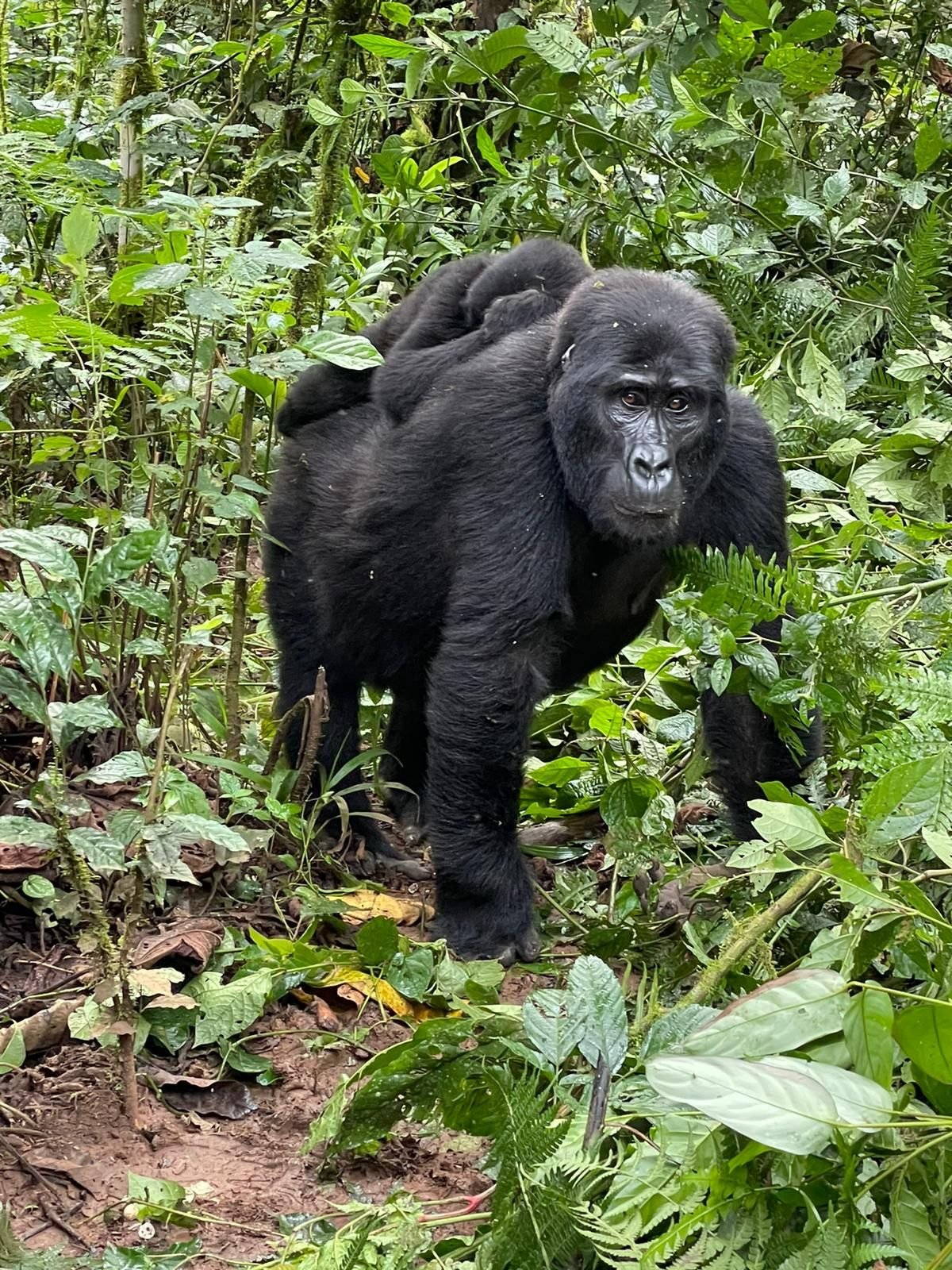
Standing just 7 meters away from a wild mountain gorilla—smelling the damp earth of the rainforest and hearing the rhythmic chewing of a 200kg silverback—is one of the few wildlife experiences that actually lives up to the hype. It is quiet, unpredictable, and far more powerful than any documentary can convey.
Planning a gorilla trekking Uganda and Rwanda safari is a logistical puzzle.
At Orugano Safaris, we don’t just book tours; we operate them. We own Orugano Bwindi Lodge in the Nkuringo sector, and we’ve guided everyone from 20-something backpackers to 75-year-old retirees through these vines.
This guide is the master pillar for your 2026 planning. If you want one page that cuts through the noise, this is it.
Table of Contents
- Why Uganda?
- Gorilla Permit Costs (2026)
- Uganda vs Rwanda: The Real Choice
- Bwindi vs Mgahinga
- The 4 Sectors of Bwindi
- Kigali vs Entebbe: Logistical Hack
- Difficulty & Fitness
- What to Pack & How to Shoot
- The Habituation Experience
- Best Time to Visit
Why Uganda is the King of Gorilla Trekking
Uganda remains a top choice for gorilla trekking Uganda and Rwanda enthusiasts seeking value.
Uganda holds roughly half of the world’s 1,063 mountain gorillas. While Rwanda offers a polished, luxury-focused experience, Uganda offers variety. You get dense rainforests in Bwindi, volcanic slopes in Mgahinga, and the ability to combine your trek with chimpanzees and savannah wildlife in a single loop. For many, it’s simply better value for a deeper African adventure.
Gorilla Permit Costs in Uganda (2026)
The permit is your golden ticket. Without it, the rangers won’t even let you past the gate. These are issued by the Uganda Wildlife Authority (UWA) and are strictly limited to 8 people per gorilla family per day.
| Visitor Category | Standard Trek | Habituation (4 hours) |
|---|---|---|
| Foreign Non-Resident | $800 USD | $1,500 USD |
| Foreign Resident | $700 USD | $1,000 USD |
| East African Citizen | UGX 300,000 | UGX 750,000 |
Operator Tip: Avoid the common gorilla trekking permits mistakes like booking for the wrong sector relative to your lodge. Read 7 Mistakes You’re Making with Booking Gorilla Permits to save your budget.
The Reality of Gorilla Trekking Uganda and Rwanda: Which is Best?
This is the #1 question we get. Rwanda is for convenience (2 hours from the airport); Uganda is for the “Real Africa” experience and value.
- Choose Uganda if: You want a 10-14 day safari, better pricing, and the unique habituation experience.
- Choose Rwanda if: You only have 3 days and a high budget.
For a blunt, deep dive into which is right for you, see Uganda vs. Rwanda: Which Country is Best for Your Gorilla Trekking Safari?.
Bwindi vs Mgahinga: Which Park?
Most people go to Bwindi because it’s famous. But Mgahinga is a hidden gem where the “Gold meets Silver” (Golden Monkeys and Silverbacks).
- Bwindi: Ancient, thick, and has the most families.
- Mgahinga: Volcanic, open views, and usually much quieter.
Decide which park fits your vibe here: Mgahinga vs. Bwindi: Choosing the Right Park for Gorilla Trekking in Uganda.
The 4 Sectors of Bwindi
Bwindi isn’t one place; it’s four distinct trailheads:
- Buhoma: The original, lower altitude, “easier” treks.
- Ruhija: High altitude, great for birders.
- Rushaga: The busiest sector with the most permits.
- Nkuringo: The most dramatic views. This is where Bwindi Lodge (Orugano) sits. It’s a “leg-burner” of a trek, but the views of the Virungas are unbeatable.
Kigali vs Entebbe: The Logistical Hack
Stop thinking about borders and start thinking about drive time.
- Entebbe (EBB): 9-10 hour drive to Bwindi. Best if you’re visiting Queen Elizabeth NP or Murchison Falls.
- Kigali (KGL): 4-5 hour drive to Southern Bwindi. Best for short “gorilla-only” trips.
We broke down the pros/cons of each route in Kigali vs. Entebbe: What’s the Best Way to Get to Bwindi Forest?.

Is Gorilla Trekking Hard?
Yes. It can be. You aren’t walking on a paved path; you’re hacking through vines and climbing muddy slopes. Treks can last 45 minutes or 7 hours.
How to survive it:
- Hire a Porter: It’s $20 well spent. They carry your bag and literally pull you up the slopes. It also directly supports the local community.
- Fitness: You don’t need to be an Olympic athlete, but you should be comfortable walking for 4 hours on uneven ground.
Read the full breakdown on fitness and difficulty: Is Gorilla Trekking Hard? Everything You Need to Know About Fitness and Difficulty.
What to Pack & How to Photograph
Don’t show up in bright white sneakers and a tank top. The forest has “safari ants” and stinging nettles.
- Packing: Think “Gardening Gloves” and “Gaiters.” See What to Pack for Gorilla Trekking: The Essential 2026 Checklist.
- Photography: It’s dark under the canopy and flash is banned. You need high ISO and fast lenses. See The Ultimate Gorilla Trekking Photography Guide.
The Habituation Experience: 4 Hours vs 1
In Rushaga and Nkuringo, you can join researchers for the Gorilla Habituation Experience. You spend 4 hours with a family that is still getting used to humans. It’s raw, educational, and perfect for an adventure honeymoon Bwindi.
Best Time to Visit
When booking your gorilla trekking Uganda and Rwanda trip, timing is everything.
- Dry Season (June-Sept, Dec-Feb): Easier hiking, better for photography.
- Rainy Season (March-May, Oct-Nov): The “Green Season.” Lush, misty, and perfect for that “Gorillas in the Mist” atmosphere.
Why Orugano Safaris?
We are your trusted partner for gorilla trekking Uganda and Rwanda experiences.
We live here. We operate here. Whether you are landing in Kigali or Entebbe, we handle the permits, the 4×4 transfers, and the lodge stays. We know the gorilla trekking Uganda and Rwanda landscape better than anyone because we are field operators, not just travel agents.
Ready to book? Let’s chat about your dates and fitness level, and we’ll build the itinerary that actually makes sense for you.


Why Trust Orugano Safaris with Your Trek?
Booking a gorilla safari is not just about buying a permit. It’s about knowing the right permits, route, lodge, and timing are all handled properly.
As a Uganda-based operator and owner of Orugano Bwindi Lodge in Nkuringo, we help travelers arrange permits, transfers, and full gorilla safaris throughout the year from both Entebbe and Kigali.
We provide:
- Permit support: We help secure the best available dates and sectors for your travel plan.
- Local expert guides: Practical advice before and during your trip. Our lead guide, Moses, has been navigating these ridges for over a decade.
- 24/7 support: From arrival through trek day.
- Owner-run lodge insight: Staying at Orugano Bwindi Lodge gives you a well-positioned base in one of Bwindi’s most scenic sectors.
Our Commitment: Why the Way You Travel Matters
This part matters to us deeply. Gorilla tourism only works long-term if it protects wildlife, respects communities, and creates a better travel model than mass tourism.
At Orugano Safaris, sustainability isn’t an extra paragraph we add for marketing. It shapes how we design safaris and how we host you on the ground.
We support low-impact, high-value travel
Gorilla trekking works best when visitor numbers are controlled and the experience stays intimate. We support that model because it protects the gorillas and gives you a much better encounter.
We work with local people, not around them
From guides and porters to lodge staff, drivers, farmers, craftspeople, and cultural hosts, meaningful safari value should stay in the destination. That’s part of how travel becomes a positive force instead of just a transaction.
We believe owner-operated lodging makes a difference
When you stay at an owner-operated property like Orugano Bwindi Lodge, your experience becomes more personal, accountable, and rooted in place. Decisions are made by people who live the destination, know the communities, and care about the long-term health of the area.
That means:
- Better local knowledge
- More direct community connection
- Greater consistency in service
- A stronger incentive to protect the landscape that makes the experience possible
We care about conservation beyond the checklist
We are proud to operate in a region where conservation, community livelihood, and tourism are closely connected. Choosing the right operator helps reinforce that system. It tells the market that travelers value substance, not just logistics.
If you’re going to make a journey this special, we think it should benefit more than just your photo gallery.
What Should You Pack for Gorilla Trekking Uganda?
Packing well can make the difference between a hard day and a good one. You don’t need specialist expedition gear, but you do need practical layers and a few smart extras.
For a full breakdown of gear, see What to Pack for Gorilla Trekking: The Essential 2026 Checklist.
Your detailed gorilla trekking checklist
Clothing
- Long-sleeved shirt: Protects your arms from nettles, branches, insects, and sun.
- Long trekking trousers: Essential for scratches, mud, and vegetation.
- Long socks: Pull them over or under your trouser hems for extra protection against ants and vegetation.
- Light fleece or warm layer: Mornings can be cool, especially before you start hiking.
- Lightweight waterproof rain jacket: Bwindi and Mgahinga can be wet at any time of year.
Footwear
- Waterproof hiking boots with ankle support: This is one item we don’t recommend compromising on.
- Gaiters: Very useful for mud, water, and especially safari ants. If you’ve never encountered safari ants before, trust us, you’ll be glad to have that extra barrier.
- Comfortable lodge shoes: For changing into after the trek.
Gear
- Waterproof daypack: A regular daypack is fine, but a waterproof one or one with a rain cover is much better in the forest.
- Reusable water bottle: Bring enough water for several hours of hiking.
- Small packed lunch or snacks: Usually arranged by your lodge, but worth confirming.
- Gardening gloves: Not glamorous, but genuinely helpful when grabbing branches or steadying yourself on steep sections.
- Walking stick: Often available at the briefing point or from your lodge.
Health and protection
- Insect repellent: Useful before and after the trek.
- Sunscreen: Even misty mountain days can expose you.
- Personal medication: Keep it in your daypack, not your suitcase.
- Tissues or wet wipes: Handy on a long trek.
- Face masks if required by current park health guidance: Rules can change, so we keep guests updated.
Optional but very useful extras
- Camera with good low-light ability
- Extra battery
- Microfiber cloth for wiping moisture from lenses
- Zip-lock bags or dry bags for electronics
- A change of clothes for after the trek
What should you leave behind?
Leave behind:
- Anything heavy you won’t use
- Brightly unrealistic safari fashion that prioritizes photos over comfort
- Drones
- Flash equipment for gorilla viewing
- The idea that you need to pack for every possible emergency
Think practical, light, and weather-ready. That’s the winning formula.
How Do You Take Great Gorilla Photos Without Flash?
This is a big question because the forest is often dark, misty, and green, and flash photography is not allowed around the gorillas.
The good news? You can still get wonderful photos. Want photography tips? Read The Ultimate Gorilla Trekking Photography Guide.
Photography tips for low light in the forest
1. Use the fastest lens or camera you have
If you have a camera with a lens that performs well in low light, bring it. A phone can still work, but a dedicated camera gives you more flexibility.
2. Raise your ISO without fear
Forest photography often means shooting at a higher ISO than you normally would. A slightly grainy photo is much better than a blurry one.
3. Keep your shutter speed up
Gorillas may sit still one moment and move the next. If possible, aim for a shutter speed that can freeze gentle movement, especially with juveniles.
4. Use natural openings in the vegetation
Sometimes the best photo comes from waiting half a minute rather than forcing a shot through leaves. Let the scene open up.
5. Focus on eyes and behavior, not just close-ups
A great image isn’t only about filling the frame. A mother with an infant, a juvenile climbing, or a silverback watching the group can tell a stronger story than a tight portrait alone.
6. Turn off flash completely
This rule matters for the welfare of the gorillas and the quality of the encounter.
7. Stabilize yourself before shooting
Plant your feet, tuck your elbows in, and shoot in short bursts if needed.
8. Put the camera down sometimes
This might be the most important tip of all. Take your photos, yes. But give yourself at least a few quiet moments to simply watch.
The best souvenir is often the memory of the silverback looking straight through you in complete silence.
Recommended Gorilla Trekking Packages
If you already know you want to see gorillas but are still choosing the right itinerary, here are three strong starting points:
3-Day Gorilla Trekking Safari from Kigali
Best if you want the shortest, most efficient route to southern Bwindi with minimal road time.
5-Day Primates Safari
Best if you want to combine gorilla trekking with chimpanzees and create a fuller primate-focused trip.
7-Day Ultimate Uganda Safari
Best if you want gorillas plus classic Uganda wildlife and a more rounded safari experience.
You can also explore related planning ideas in Is Gorilla Trekking Hard? Everything You Need to Know About Fitness and Difficulty and Kigali vs. Entebbe: What’s the Best Way to Get to Bwindi Forest?.
Frequently Asked Questions
Is gorilla trekking in Uganda worth it?
Yes, for most travelers it absolutely is. You spend a lot to get there, but very few wildlife experiences feel this personal, this close, and this memorable. You’re not watching from a vehicle. You’re in the forest with one of the world’s rarest primates.
How hard is gorilla trekking in Uganda?
It ranges from moderate to challenging depending on where the gorillas are that day. Some treks take 45 minutes to 2 hours, while others can stretch to 3 to 6 hours or more including the return. The good news is that porters, walking sticks, and careful pacing make it manageable for many travelers.
Is Rwanda or Uganda better for gorilla trekking?
Uganda is usually better for value, variety, and safari combinations. Rwanda is better if you want a shorter airport transfer and a luxury-first short trip. If you want the best balance of price and experience, Uganda is often the stronger choice.
Can older people do gorilla trekking?
Yes, many do. We regularly help travelers in their 50s, 60s, and 70s plan successful treks. Fitness and mobility matter more than age, and we recommend being honest about your comfort level so we can advise well.
What is the cheapest way to see gorillas in Uganda?
The most budget-friendly route is usually a standard Uganda gorilla permit at $800 combined with shared road transfers or a short itinerary from Kigali to southern Bwindi. Traveling outside the busiest months can also help reduce overall trip costs.
What is the age limit for gorilla trekking?
The minimum age is 15 years. This rule helps protect the gorillas and ensures trekkers can handle the conditions.
Is it safe?
Yes. You trek with trained rangers and follow strict rules including maintaining distance and avoiding flash photography.
How far in advance should you book gorilla permits?
For peak months, we recommend booking 6 to 12 months in advance. The best dates and sectors go first.
Can you combine gorilla trekking with other Uganda experiences?
Absolutely. Many travelers pair Bwindi with chimpanzees, Queen Elizabeth National Park, Lake Mburo, or a longer Uganda circuit.
Is one hour with the gorillas really enough?
Emotionally, it never feels like enough. Practically, yes. The one-hour limit protects the gorillas while still giving you a powerful encounter.
What if you’re sick on trek day?
You should not trek if you have flu, cold, or other contagious symptoms because gorillas are vulnerable to human diseases. Tell your guide immediately so the best next step can be discussed.
Your Journey Starts Here
Whether you’re planning a short gorilla trip or a wider East Africa safari, the mountain gorillas are waiting.
If you want to build a bigger trip around your trek, start with The Perfect 7-Day Uganda Safari Itinerary: Gorillas, Wildlife & Culture for inspiration, or browse our Uganda safaris and gorilla trekking collection.
You may also find these related guides helpful as part of this planning cluster: Uganda vs. Rwanda: Which Country is Best for Your Gorilla Trekking Safari?, Mgahinga vs. Bwindi: Choosing the Right Park for Gorilla Trekking in Uganda, The Gorilla Habituation Experience: 4 Hours with the Gentle Giants, Is Gorilla Trekking Hard? Everything You Need to Know About Fitness and Difficulty, and Kigali vs. Entebbe: What’s the Best Way to Get to Bwindi Forest?.
Ready to secure your 2026 permit? Don’t guess which sector has permits left. WhatsApp us your dates, and we’ll check the UWA portal for you right now.
Explore our Gorilla Trekking Packages or send us a message today!