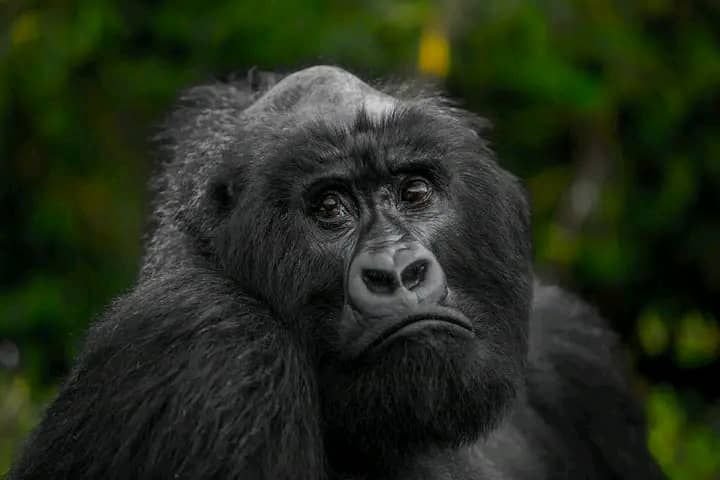
The gorilla habituation experience bwindi is one of the rarest wildlife encounters on Earth. Unlike standard gorilla trekking, which allows visitors just one hour with a fully habituated gorilla family, this experience gives you up to four hours alongside researchers working with semi-habituated mountain gorillas.
Uganda is currently the only country in the world offering tourists this type of mountain gorilla encounter.
But the experience is changing operationally from August 2026 and into 2027. The habituation briefing and departure point will shift from Rushaga to Rubuguri in southern Bwindi, affecting lodge choice, morning logistics, transfer times, and trek planning.
At Orugano Safaris, we operate in southern Bwindi every week. For guests staying at Orugano Bwindi Lodge in Nkuringo, Rubuguri is only about 20 minutes away, making it one of the closest upscale lodges to the new habituation start point.
In this guide, you’ll see what is changing for 2027, how habituation really differs from a standard trek, and why many of our guests now combine both experiences back-to-back.
Table of Contents
- What Exactly is Gorilla Habituation?
- Why Uganda Is the Only Country Offering Gorilla Habituation
- 1 Hour vs. 4 Hours: The Key Differences
- Where It Happens: The Southern Advantage
- A Day in the Life: What to Expect During the Experience
- Gorilla Habituation Photography Tips
- Is It Too Hard? Fitness and Difficulty Explained
- Permits, Costs, and Booking Logistics
- The Orugano Difference: Why Trek With Us?
- Frequently Asked Questions
What Exactly is Gorilla Habituation?
Right now, there are roughly 1,063 mountain gorillas left on Earth. About half of them live right here in Bwindi Impenetrable National Park. When a new wild gorilla family is identified, they aren’t naturally comfortable around humans. They are wild, protective, and, rightfully so, a bit shy.
Habituation is the gentle, multi-year process (usually 2 to 3 years) of getting a wild group used to human presence. Rangers and researchers visit them daily, mimicking their sounds, eating vegetation near them, and showing that we are not a threat.
The gorilla habituation experience bwindi allows a maximum of four people to join the researchers and rangers on these daily visits. You aren’t just a tourist; you are a participant in a vital conservation process.
Bwindi is also a UNESCO World Heritage Site, which helps explain why access is so tightly managed and conservation rules are taken seriously on every trek.


Why Uganda Is the Only Country Offering Gorilla Habituation
If you are comparing gorilla destinations, this point matters: Uganda is the only country where tourists can book a true mountain gorilla habituation experience.
You cannot do this in Rwanda, and you cannot do it in DR Congo. Both destinations offer standard gorilla trekking with fully habituated groups, but not the researcher-led, four-hour access to semi-habituated mountain gorillas that Uganda allows in Bwindi.
These permits are tightly controlled by the Uganda Wildlife Authority (UWA) and are issued only in Bwindi’s southern sector, where the gorilla habituation experience bwindi operates. That exclusivity is why permits sell out well ahead of peak travel months, and it is also why your lodge location in southern Bwindi matters more here than on a standard trek.
1 Hour vs. 4 Hours: The Key Differences
“Is it worth the extra money?” It’s the most common question we get. The answer depends on your “wildlife appetite.” If you want the perfect photo and a quick check off the bucket list, standard trekking is great. But if you want to see a Silverback wake up, forage, play with his toddlers, and eventually settle for a nap, you need those four hours.
| Feature | Standard Gorilla Trek | Gorilla Habituation Experience |
|---|---|---|
| Time with gorillas | 1 hour | 4 hours |
| Gorilla groups | Fully habituated | Semi-habituated |
| Permit cost | $800 | $1,500 |
| Group size | 8 tourists | 4 tourists |
| Experience style | Tourism-focused | Research-focused |
| Difficulty | Moderate | Usually harder |
| Best for | First-time visitors | Wildlife enthusiasts & photographers |
The practical difference is not just time. Standard trekking is built for visitor access. Habituation is built around the work of trackers, rangers, and researchers. That means the gorillas may move more, react more, and make you work harder for your sightings. If you are still deciding, our guide on Uganda vs Rwanda gorilla trekking helps you compare the overall experience.
Where It Happens: The Southern Advantage
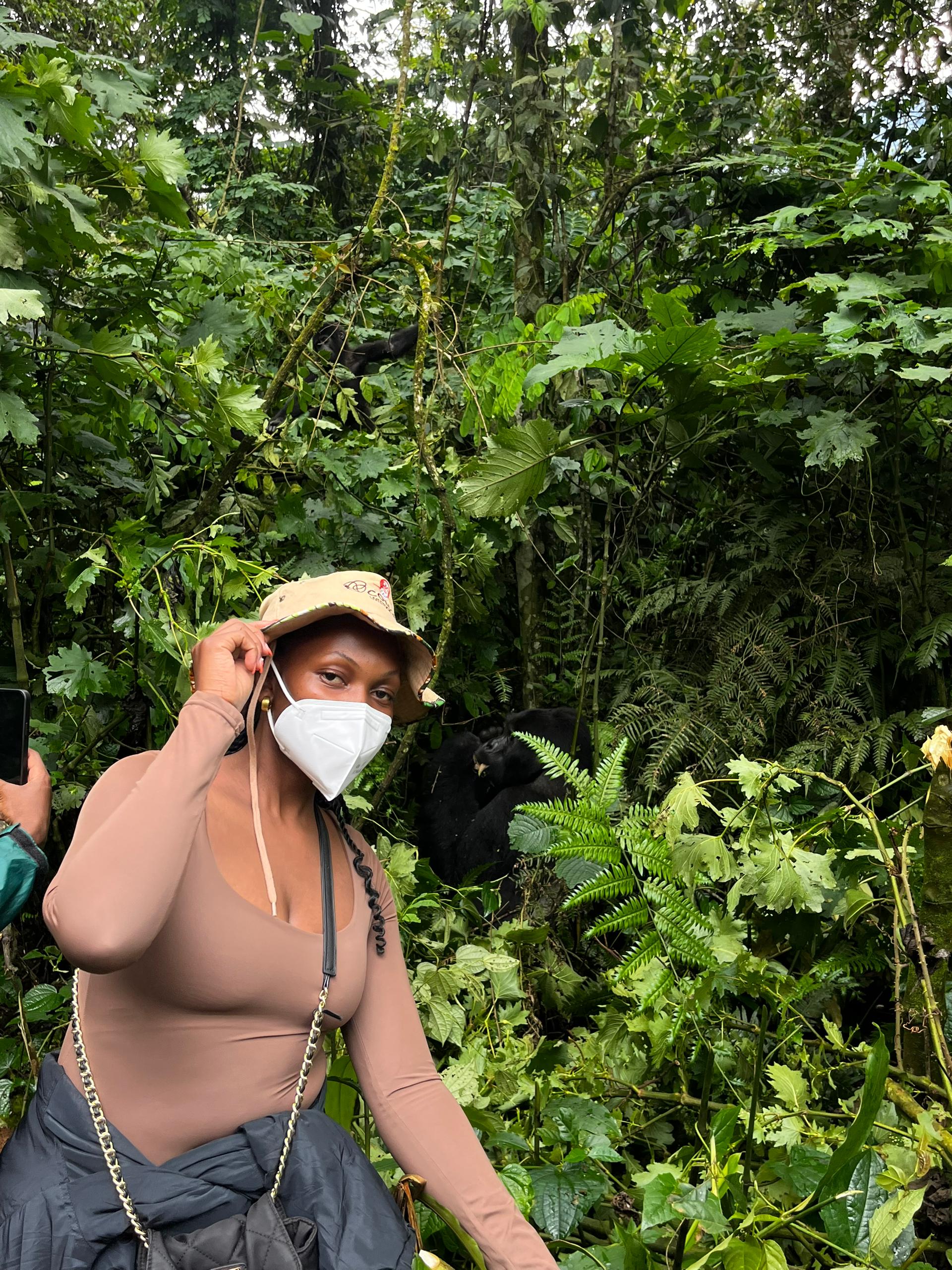
You can’t do this everywhere. While standard trekking happens across four sectors of Bwindi, the gorilla habituation experience bwindi is exclusive to the southern Bwindi area.
The critical 2027 update is this: the habituation briefing and start point shifts to the Rubuguri offices, not Rushaga. If you have older information saved from 2025 or 2026, update it now. That change affects morning timing, lodge choice, and how much road time you face before you even enter the forest.
This is where our location gives you a practical advantage. Because we own Orugano Bwindi Lodge in Nkuringo, our guests are only about 20 minutes from Rubuguri. That makes a real difference on a habituation day, when the start is earlier, the forest hours are longer, and you do not want to waste energy bouncing around on rough roads before sunrise.
If you are looking for more activities to pair with your habituation, the southern Bwindi region also works well for community walks and slower recovery afternoons after a long trek day.
A Day in the Life: What to Expect During the Experience
Your day starts earlier than a standard trek. You’ll be at the park headquarters by 7:00 AM for a specialized briefing.
The Hike In
You aren’t just walking to a pre-located spot. You are usually following trackers and researchers working from the previous night’s nests and fresh signs on the trail. You learn what they look for: bent stems, stripped vegetation, fresh dung, and knuckle prints in wet ground. This is one of the biggest differences from a standard trek. You are not simply being led to a gorilla family that is already settled for visitors.
The Encounter
Once you find them, the clock starts. For the next four hours, you stay with researchers and rangers following a semi-habituated family. That is why habituation is not just “longer trekking.” It is less polished, less predictable, and much more educational.
You hear chest beats carry through the forest before you always see who made them. You hear researchers identify contact calls and warning vocalizations as they happen. Juveniles often test boundaries by moving closer, climbing, bluffing, and then backing off. A silverback may give a short warning grunt if he wants more space. These are the details that make habituation different: you are watching a family that is still learning to tolerate human presence.
That also means one important rule stays firm. Gorillas under habituation are not 100% wild in the way of a first contact group, but they are not yet fully comfortable with humans either. You must follow ranger instructions, keep your distance, stay calm when the group shifts direction, and never push in for a closer photo.
You’ll watch researchers take notes on health, feeding, movement, and social interactions. You are encouraged to ask questions. Why is that juvenile separating from the group? Why are the females grunting differently now? Why does the silverback tolerate one youngster and shove off another? That is the value of the day: you are not only watching gorillas, you are learning the reasons behind what they do.

The Emotional Connection
By hour three, most guests settle into a different rhythm. The first rush for photos is over. You stop trying to “collect moments” and start noticing behavior. In our experience, that is why the extra permit cost makes sense for the right traveler. If you want to understand gorillas rather than just see them, habituation is 100% worth it.
Gorilla Habituation Photography Tips
If photography matters to you, the gorilla habituation experience bwindi gives you one clear advantage: time. Four hours means you are not forced to grab rushed frames in the first ten minutes. You can wait for cleaner angles, better behavior, and softer light.
A few practical rules and tips:
- No flash. It is not allowed, and it can stress the gorillas.
- Best lens range: a 70–200mm lens is the safest all-round choice for most guests. It gives you flexibility when the forest is tight and when subjects are slightly farther back in foliage.
- Expect low light. Bwindi is dark under canopy, especially in the wet months and on cloudy mornings.
- Use a faster shutter speed when behavior picks up. If juveniles are moving or a silverback is shifting position, try to stay around 1/250 sec or faster if your light allows.
- Raise ISO when needed. Clean sharp images at a higher ISO are better than blurred images at a lower ISO.
- The mist can help. Rain and mist soften light and reduce harsh contrast, which is often good for gorilla portraits if you keep your gear protected.
The biggest reason habituation works so well for photography is simple: with four hours, you can recover from missed shots. On a one-hour trek, if the gorilla turns away or drops into thick leaves, that may be your whole window. On habituation, you usually get more chances.
If you want camera-specific advice before you travel, read our guide on what to pack for gorilla trekking and our photography planning guide before you lock in your kit.
Is It Too Hard? Fitness and Difficulty Explained
Don’t let the name “Impenetrable Forest” scare you off, but do respect it. The gorilla habituation experience bwindi is physically demanding. The terrain around southern Bwindi is steep, and in Nyabaremura it is often muddy, slippery, and slow going. You will be hiking at altitudes between 1,160m and 2,607m.
Here is the honest reality:
- The pace is set by the gorillas. If they move uphill, sidehill, or deep into thick vegetation, you follow. There is no fixed tourist trail because the gorillas determine the route.
- The ground can be rough. Expect steep farm edges, narrow forest paths, wet roots, and mud that sticks to your boots when it rains.
- The day is long. Expect to be in the forest for 6 to 8 hours total, including the 4 hours of observation.
- Porters are essential, not optional if you are unsure of your fitness. They are available at the Nyabaremura office, and having one beside you on a muddy descent or steep climb makes a real difference.
We have guided guests from their 20s to their 70s, but the guests who enjoy habituation most are the ones who arrive prepared for a hard walking day and hire a porter without hesitation.
Looking for a full kit list? Check out our guide on what to pack for gorilla trekking for practical packing tips.
Planning Your Trip: Permits and Costs
The Uganda Wildlife Authority (UWA) strictly regulates these permits. Because there are only 4 permits per group and currently only two groups being habituated, that means only 8 people in the entire world can do this experience on any given day.
- Cost: $1,500 per person.
- What’s Included: Park entrance fees, researcher fees, ranger guides, and 4 hours with the gorillas.
- 2027 Logistics Update: briefing and departure shift to Rubuguri offices, so your lodge location now matters more than before.
- When to Book: At least 6 to 10 months in advance, especially for the high seasons (June–September and December–February).
Pro Tip: Many of our guests now use a “double-dip” strategy: a standard gorilla trek on day one, then the habituation experience on day two. Day one lets you get your portrait shots and first gorilla nerves out of the way. Day two is where you slow down, listen to the researchers, and pay attention to juvenile behavior, feeding patterns, and group dynamics. If you send us your dates, we’ll check permit availability in real time and advise whether this combo is still possible: enquire here.
If you are still choosing your route into Bwindi, compare Kigali vs Entebbe for Bwindi before you book flights, and check our guide on the best time to visit Bwindi if you want the best balance between trail conditions and permit availability.
The Orugano Difference: Why Trek With Us?
Every safari company claims to be “local experts.” We back it up.
We are an owner-operated company based right in the Bwindi region. When you stay at our lodge in Nkuringo, you aren’t just booking a room near the forest. You are positioning yourself for a smoother habituation day.

Why trust us with your habituation?
- Rubuguri proximity: From Orugano Bwindi Lodge, Rubuguri is about 20 minutes away. For many other southern Bwindi properties, you are looking at 40+ minutes, sometimes longer depending on road condition and morning weather.
- We know this terrain week by week: We operate in southern Bwindi constantly, so we advise based on actual ground reality, not generic park descriptions.
- We handle permits directly: We monitor availability, hold space when possible, and help you build the itinerary around the permit you can actually secure.
- The new departure timing matters: Guests used to plan around a 07:00 start from Rushaga. With the operational shift, guests will now leave around 07:20 for Rubuguri, which changes wake-up times, breakfast timing, and how you structure the previous night.
Frequently Asked Questions
Is gorilla habituation experience bwindi worth the $1,500?
If you are a photographer, a researcher-minded traveler, or someone who wants to understand gorilla behavior beyond a single sighting, yes. The key thing to know is that habituation is not just a standard trek with more minutes added on. You are following a semi-habituated family with researchers, which makes the experience less predictable, more active, and far more useful if you care about behavior, hierarchy, and juvenile interaction.
Is gorilla habituation harder than normal gorilla trekking?
Usually, yes. The terrain is often steeper and muddier, and the route is less predictable because the gorillas determine where you go. You also stay out longer. If you can manage a long hill walk and you hire a porter, you are in a much better position to enjoy it.
Can children do gorilla habituation?
No one under 15 years can do gorilla habituation. That age limit is set by UWA and applies to both standard gorilla trekking and habituation.
Can you do gorilla habituation in Rwanda?
No. Rwanda does not offer mountain gorilla habituation for tourists. Uganda is currently the only country offering it in Bwindi.
How many permits are available daily?
A maximum of 8 permits per day. That is why the experience sells out early, especially in the drier travel months.
Can I do this from Kigali?
Absolutely. Many of our guests fly into Kigali, Rwanda, and take the 4-hour drive across the border to Bwindi. It is often shorter and more practical than the 9-hour drive from Entebbe for many itineraries. If you are comparing entry points, read our guide on Kigali vs Entebbe for Bwindi.
What should I pack?
Briefly: sturdy hiking boots, long trousers, a waterproof jacket, gloves for grip, snacks, water, and camera rain protection. For a full checklist, see what to pack for gorilla trekking.
Is it safe?
Yes. You are with armed rangers and experienced researchers who understand gorilla body language better than anyone. They will guide you on how to sit, when to move, and how to stay safe.
What happens if it rains?
You trek anyway unless park authorities suspend activity for safety reasons, which is rare. Rain means more mud and slower footing, but it also brings mist that can soften the forest light and help photography. Just protect your camera gear properly.
Ready to join the researchers?
If you are planning for 2027, build your trip around the new Rubuguri start logistics and choose your lodge carefully. If you stay with us at Orugano Bwindi Lodge, you are only about 20 minutes from the new briefing point, which is one of the strongest practical advantages you can have on habituation day.
View our 3-Day Gorilla Habituation Package or contact us today to check 2027 permits, compare a standard trek vs. habituation, or ask us to plan the two-day “double-dip” strategy for you.
