Your Ultimate Guide to Uganda’s Gorilla Haven

Bwindi isn’t called “Impenetrable” because it sounds catchy for a brochure. It’s called that because the undergrowth is so dense that without a ranger hacking a path with a machete, you aren’t going anywhere. This is a 25,000-year-old rainforest where the ground is always damp, the mist hangs low over the ridges until noon, and the hills are steep enough to make your quads burn for days.
If you are looking for a sanitized, drive-through safari, Bwindi isn’t it. But if you want to stand seven meters away from a 200kg Silverback while mud soaks into your socks, this is the only place on earth that matters.
As of 2026, Bwindi Impenetrable National Park remains the most critical sanctuary for the world’s mountain gorillas, housing roughly 459 of the 1,063 left on the planet. This UNESCO World Heritage site isn’t just a park; it’s a massive, tangled ecosystem that holds some of the most unique animals of Uganda.
Why is Bwindi divided into sectors?
One of the biggest mistakes travelers make is booking a “Bwindi permit” without realizing the park is split into four distinct trekking sectors: Buhoma, Nkuringo, Ruhija, and Rushaga. These sectors are hours apart by road: sometimes a 4-hour drive on winding, unpaved tracks. Where you sleep must match where you trek.
- Buhoma (North): The “original” sector. It’s at a lower altitude, making the air thicker and the treks generally (but not always) shorter. It has the most established lodges and is the easiest to reach if you are coming from Queen Elizabeth National Park.
- Nkuringo (Southwest): This is for the hikers. The views of the Virunga Volcanoes are staggering, but you’ll pay for them with your knees. The walk back up to the lodges at the end of the day is a legendary “stairmaster” challenge.
- Ruhija (East): The highest sector. It’s cold, misty, and a paradise for birders. If you want to see the African Green Broadbill, you come here.
- Rushaga (South): This sector has the highest number of habituated families and is the only place you can do the 4-hour Gorilla Habituation Experience. It’s also the closest to the Rwanda border, making it ideal for those flying into Kigali.
What is the Gorilla Trekking experience actually like?
Forget the “magical” descriptions you see online. Here is the operational reality: You wake up at 6:30 AM in the cold mist of Nkuringo or Buhoma. You’ll need a fleece. After a briefing at the park HQ, you’re assigned a gorilla family based on your fitness level. Then, you walk.
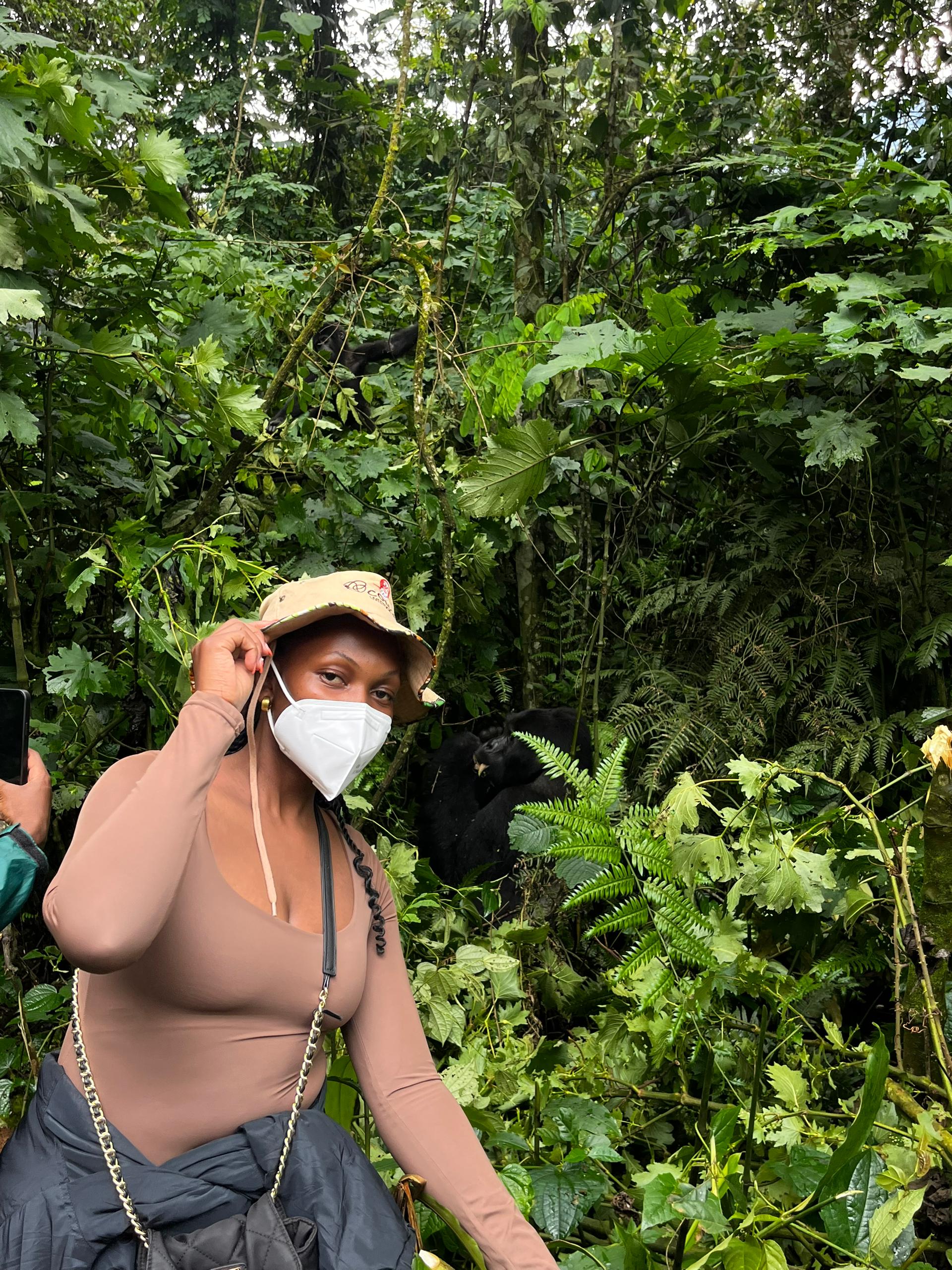
The trek can take 45 minutes or 7 hours. The gorillas don’t stay still; they move to find fresh bamboo shoots and wild celery. You will scramble over fallen logs, push through stinging nettles (wear gloves!), and navigate slippery slopes.
When you find them, the clock starts. You get exactly 60 minutes. You must keep a 7-meter distance, but sometimes a curious juvenile might break that rule: you just stay still and let the silverback lead. It is quiet, smelly, and intense.
Understanding Gorilla Trekking Permits
In 2026, gorilla trekking permits in Uganda cost $800 for foreign non-residents. If you want more time, the Habituation Experience in Rushaga costs $1,500 and gives you four hours with a semi-habituated family.
Note from the field: Permits sell out 6 to 10 months in advance for the peak months of June–September and December–February. If you are planning an adventure honeymoon Bwindi trip for these months, don’t wait. Send us your dates, and we’ll check real-time availability for you.
Beyond the Gorillas: The Batwa and the Forest
Bwindi isn’t just about the primates. It’s one of the most biodiverse places in Africa. If you look away from the gorillas for a second, you might spot a three-horned chameleon or one of the 350 bird species that call this canopy home.

The Batwa Cultural Experience
Before Bwindi became a national park in 1991, it was the home of the Batwa people: the “Keepers of the Forest.” They were evicted to protect the gorillas, a complex reality of conservation. Today, the Batwa Forest Experience allows you to walk through the trees with the original inhabitants.

This isn’t a staged “dance for tourists.” It’s an educational walk where they show you how they used to hunt with bows, which plants served as medicine, and how they lived in harmony with the animals of Uganda. It’s a blunt, honest look at their history and a vital way to support the local community directly.
Planning your logistics: Entebbe vs. Kigali
How you get here matters.
- The Entebbe Route: A 9-hour drive from Entebbe/Kampala. It’s a long, bumpy day in a 4×4, but it allows you to see the Ugandan countryside and stop at the Equator. Most people break this trip up with a stop at Lake Mburo.
- The Kigali Route: If you want to do gorilla trekking Uganda and Rwanda, flying into Kigali is often more efficient. It’s a 4-5 hour drive from Kigali to the southern sectors of Bwindi (Rushaga/Nkuringo).
- The Flight Option: You can fly from Entebbe to Kihihi (for Buhoma) or Kisoro (for the south) in about 90 minutes. It saves your back, but you’ll miss the scenery.
Where to stay: The Orugano Bwindi Lodge
If you want to be right on the edge of the action, our own Orugano Bwindi Lodge is perched right beside the forest. In the morning, you can often hear the calls of the forest while you drink your coffee. It’s designed for those who value authenticity over gold-plated faucets: think hot showers, comfortable beds, and a fireplace that is essential every single night.

Field Tips for Your Bwindi Trip
- The 7-Meter Rule: It’s not a suggestion; it’s for the gorillas’ health. They share 98% of our DNA and are highly susceptible to human colds and flu. If you have a cough, tell us: we’ll help you reschedule.
- Pack Gaiters: Even in the “dry” season, Bwindi is damp. Gaiters keep the mud and those “safari ants” out of your boots.
- Hire a Porter: For $20, you can hire a local porter to carry your pack. It’s the most direct way to contribute to the local economy, and when you’re on hour three of a steep climb, you’ll be glad you did.
- Waterfronts and Walks: Don’t just do the gorillas. The waterfall walk in Buhoma is a 3-hour round trip that takes you deep into the ferns and ancient trees. It’s where you truly feel the “impenetrable” nature of the park.
Bwindi doesn’t care about your fitness tracker or your fancy camera gear. It’s a raw, beautiful, and physically demanding environment. But when you finally lock eyes with a gorilla, the 9-hour drive and the mud in your boots won’t matter at all.
Ready to secure your spot?
Tell us your arrival airport and we’ll advise on the best route and check permit availability for your dates immediately.